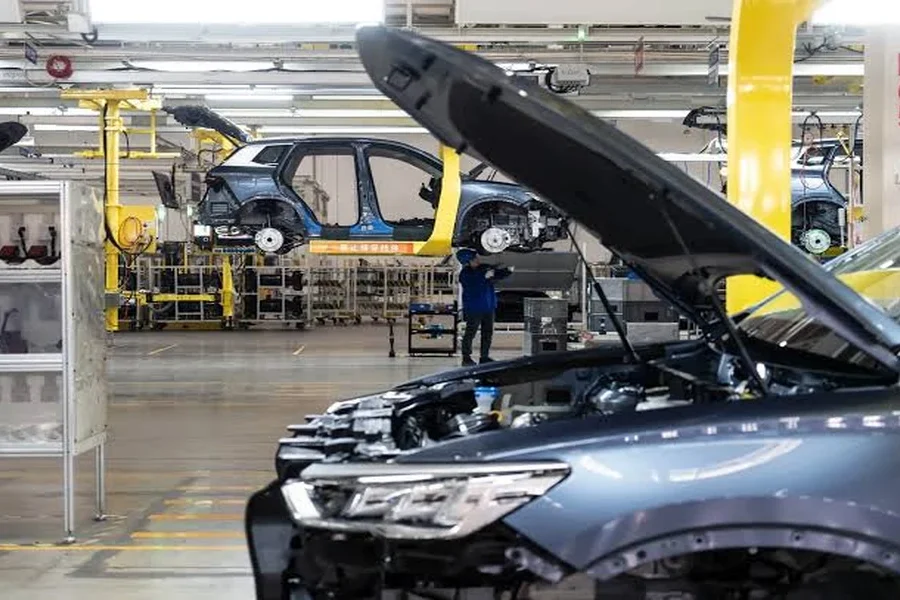

A solar roof brings electricity generation into a part of the vehicle that already receives sunlight. Its visible features attract most of the attention: the shape of the roof, the appearance of the cells, and the way the panel fits the body. Inside the module, however, encapsulation films help determine whether those features can work together as a durable assembly.
Automotive solar development already extends beyond conventional roof panels. Fraunhofer ISE has demonstrated photovoltaic cells integrated into a passenger car hood, illustrating how generation can become part of a vehicle surface. Such projects also highlight the need to coordinate cell technology, covering materials, appearance, and manufacturing. Encapsulation sits directly within that coordination process.
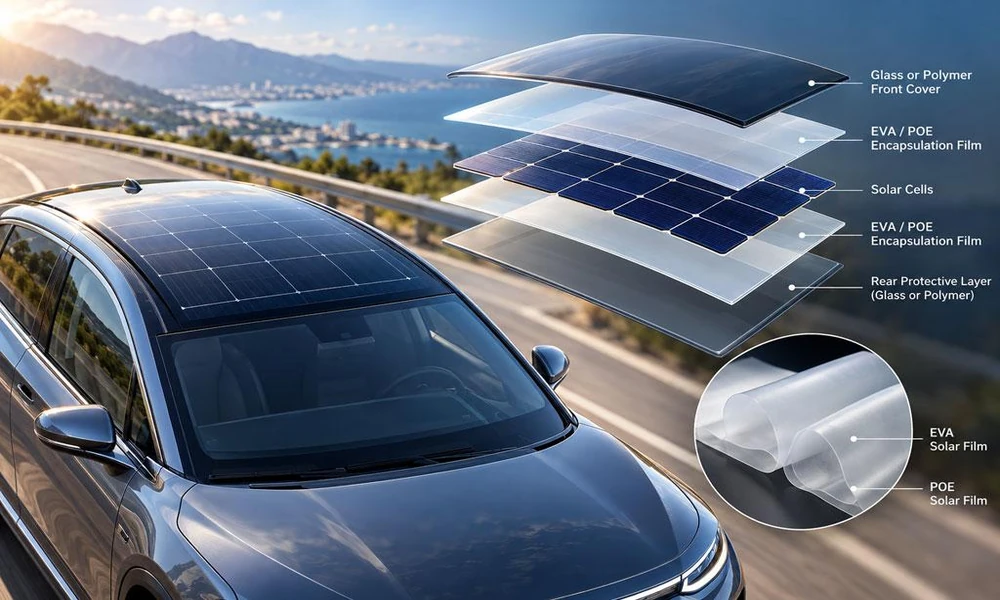
In a typical laminated module, encapsulation films surround the solar cells between a transparent front cover and a rear protective layer. During lamination, the films flow around the cells and interconnections and bond the assembly together. Depending on the roof design, those adjacent materials may include glass, polymer sheets, or other substrates. Each combination creates its own interface requirements.
One essential task is transmitting useful light. Sunlight must pass through the front cover and the encapsulant before reaching the cells. Film selection should therefore consider spectral transmission, compatibility with the cell technology, and optical changes after aging. A clear film sample is a starting point; optical measurements on the finished laminate provide a more relevant basis for comparison.
Another task is maintaining contact between layers. Good bonding helps the module remain a coherent structure as its materials respond to environmental exposure. The encapsulant also fills spaces around cell edges and interconnections. Engineers should evaluate these functions alongside the module structure, since film alone cannot prevent cell cracking or compensate for an unsuitable mechanical design.
Moisture protection adds a further responsibility. Water can enter through module edges or permeable protective layers, depending on the construction. The encapsulant influences how moisture moves within the laminate, while its adhesion helps preserve the interfaces. Front and rear barriers, edge sealing, cable exits, and installation details must therefore be considered together when designing environmental protection.
EVA, or ethylene vinyl acetate, is one material family available for this role. EVA solar film includes formulations emphasizing transparency, adhesion, and compatibility with mainstream lamination processes. For a solar roof development program, these films can enter screening trials where the chosen substrates, optical requirements, and production equipment are already defined.
POE, or polyolefin elastomer, offers another route for evaluation. POE solar films are evaluated for moisture resistance, electrical insulation, and optical performance. A development team can assess these properties against its environmental and electrical requirements, then verify bonding with the actual roof materials. The appropriate choice depends on the specific formulation and laminate construction.
Manufacturing conditions connect material selection to finished quality. Vacuum, heating, pressure, and curing must suit the film and the assembly. Inadequate processing can leave bubbles, incomplete bonding, or poorly filled regions around interconnects. Trial laminations should establish a repeatable processing window before the team evaluates production speed. Changing encapsulants should trigger a review of that window.
The distinction between encapsulation and roof attachment also deserves attention. The film inside the module performs a different job from the adhesive or fastening system that secures the module to the vehicle. A design review should identify both interfaces clearly. Otherwise, a strong internal laminate could be paired with an installation method that introduces avoidable stress or water entry.
Energy expectations should be established separately from material claims. An encapsulant can help preserve optical and electrical performance, but daily generation also depends on available sunlight, shading, roof area, vehicle use, and power electronics. IEA PVPS identifies vehicle geometry and operating patterns among the considerations affecting photovoltaic integration. Those factors belong in the energy model from the beginning. IEA PVPS
A practical development sequence begins with small material coupons, advances to representative roof laminates, and then examines the installed assembly under relevant conditions. At each stage, teams can compare appearance, electrical output, adhesion, and signs of damage before and after exposure. This produces evidence that links an encapsulant choice to the vehicle design it must support.
Appearance should also be included in the development brief. A solar roof is an exterior vehicle component, so visible bubbles, uneven coverage, or optical changes may matter even before a significant electrical loss occurs. Agreeing on inspection conditions and acceptable appearance early helps align engineering decisions with the intended customer experience.
For manufacturers exploring automotive solar roofs, EVA and POE films provide two product families to investigate within that sequence. A useful starting point is a shared specification covering the cell, roof structure, substrates, processing conditions, and intended environment. That specification turns a broad material comparison into a focused development discussion.