
As a parent, your SUV is more than just a mode of transportation; it is a mobile family sanctuary. High-end SUVs like the Jeep Grand Cherokee, upscale crossovers, and full-size family rigs offer a reassuring sense of safety. They are heavy, elevated, and packed with advanced safety features designed to protect your most precious cargo. However, that comforting sense of security can be incredibly deceptive if you are riding on worn-out tires.
Because modern SUVs handle so beautifully, it is shockingly easy to miss the subtle warning signs that your rubber is failing. Your vehicle’s weight and high tech can mask tire degradation until an emergency happens. To keep your family safe during the daily school run and weekend road trips, here are 8 hidden dangers of driving on worn-out SUV tires.
1. The False Security of All-Wheel Drive
Many moms choose high-end SUVs specifically for their advanced All-Wheel Drive (AWD) or Four-Wheel Drive (4WD) systems. It is easy to assume that your vehicle can handle anything nature throws at it. However, AWD only controls how your vehicle sends power to the wheels; it cannot create grip where none exists. If your tires are bald or worn down, your sophisticated traction system is essentially useless.
2. Dramatically Increased Braking Distances
When a car suddenly cuts you off or traffic stops unexpectedly on the highway, every millisecond counts. High-end SUVs are heavy vehicles, often weighing between 4,000 and 5,000 pounds. Stopping that much mass requires tremendous friction. As tire tread wears down, the stopping distance increases exponentially, especially on wet or slick roads. Worn tires can add several car lengths to your stopping distance, turning a close call into a serious fender bender.
3. High Risk of Hydroplaning
Tread grooves are meticulously engineered to act as channels, pumping water away from the tire’s surface so the rubber can maintain contact with the asphalt. When these grooves become shallow, they can no longer displace the water. During a sudden afternoon downpour, a worn tire will lift off the road and float on a thin layer of water-a terrifying phenomenon known as hydroplaning. When this happens, you temporarily lose all steering and braking control.
4. Confusing Your SUV’s High-Tech Safety Systems
Your luxury SUV is equipped with brilliant safety features like Anti-lock Braking Systems (ABS), Electronic Stability Control (ESC), and emergency autonomous braking. These systems rely on sensors that monitor wheel speed and traction. If your tires are worn unevenly or lack grip, they will slip constantly. This slips sends erratic data to your vehicle’s computer, which can cause your safety systems to intervene incorrectly or fail to activate when you need them most.
5. Sudden Highway Blowouts
With a busy family schedule, highway driving is inevitable. Worn tires have much thinner rubber, making them highly susceptible to punctures from stray nails, potholes, or debris. Furthermore, thin tires build up heat much faster at high speeds. This combination of heat and structural weakness is a recipe for a sudden, catastrophic blowout while traveling at 70 mph with your kids in the back seat.
6. Invisible Internal Structure Failures
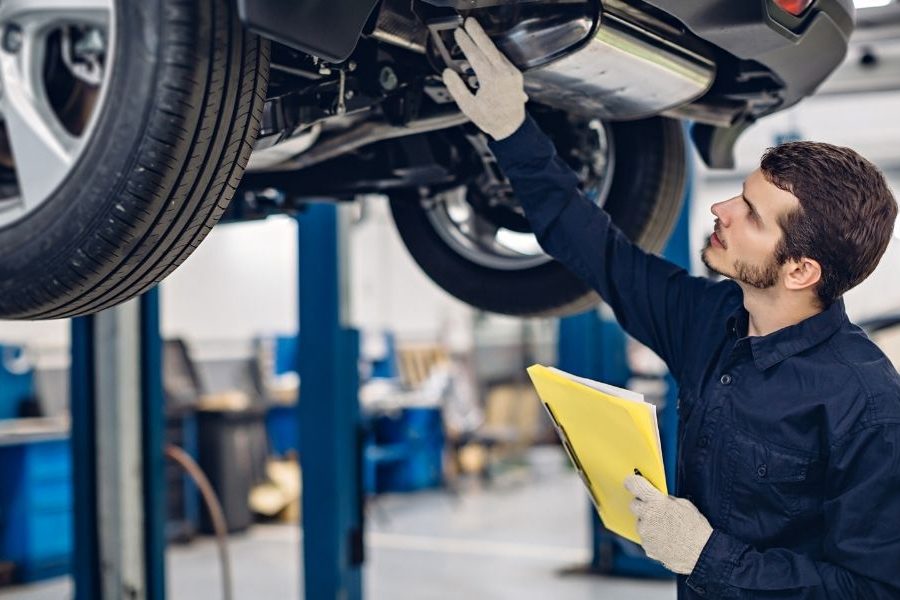
Tires do not just wear out on the outside. Over time, hitting curbs during tight parking maneuvers or driving over potholes causes internal damage. The steel belts and fabric cords inside the tire can begin to separate. This internal damage is often invisible to the naked eye until it causes a sudden failure. Regular inspections by a professional Denver SUV tire service can catch these hidden structural issues before they compromise your family’s safety on the road.
7. Unpredictability in Sudden Weather Shifts
If you live in an area prone to rapid weather changes, you know how fast a sunny afternoon can turn into a torrential downpour or a slick, icy mess. Worn-out tires lose their ability to adapt to temperature drops. The rubber hardens, and the biting edges required to grip changing road surfaces disappear, leaving you vulnerable to sliding out of control during an unexpected storm.
8. Accelerated Wear on Suspension and Steering
Driving on worn or uneven tires creates subtle, continuous vibrations. While you might not always feel them through the luxury insulation of a high-end SUV cabin, your vehicle certainly does. These vibrations put immense stress on your steering components, wheel bearings, and suspension system. Ignoring worn tires will eventually lead to a rougher ride and incredibly expensive mechanical repair bills down the road.
Your family SUV is designed to protect what matters most, but it can only do its job if its tires are in peak condition. Checking your tread depth and scheduling routine rotations isn’t just about vehicle maintenance-it is a foundational part of keeping your family safe.